- Products
- Solutions
- Customization
- About
- Resources
- Contact
- Request A Quote

When evaluating battery performance, many users focus on capacity or voltage. However, in real applications, how a battery is used often matters just as much as its specifications. In this context, Depth of Discharge (DoD) becomes a key indicator. For any lithium-ion battery pack, DoD reflects how much energy has been used during operation. Because it directly affects both performance and lifespan, understanding DoD helps users make better decisions about battery usage and maintenance.
To begin with, Depth of Discharge refers to the percentage of a battery’s total capacity that has been discharged. It shows how much energy has been taken out compared to the full capacity of the battery. For example, if a lithium-ion battery pack has used half of its stored energy, the DoD is 50%.
In simple terms, DoD is similar to checking how much fuel has been used from a tank. It does not describe how much energy the battery can hold, but rather how much has already been consumed. As a result, it gives users a clear understanding of battery usage in each cycle.
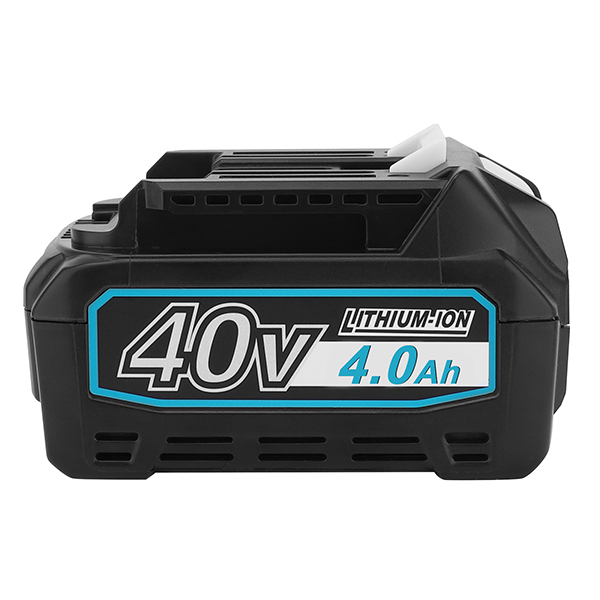
Moving forward, it is important to distinguish between battery capacity and Depth of Discharge. These two concepts are closely related but serve different purposes.
Battery capacity refers to the total amount of energy a battery can store, usually expressed in ampere-hours (Ah) or watt-hours (Wh). It is a relatively fixed value under standard conditions.
On the other hand, DoD is a variable value that changes during operation. It reflects how much of that capacity has been used. For instance, if a 100Ah lithium-ion battery pack delivers 50Ah during use, the DoD is 50%.
Therefore, capacity defines the total energy available, while DoD shows how much of that energy has been consumed.
In practical terms, calculating DoD is straightforward and useful for monitoring battery usage. The formula is:
DoD (%) = (Discharged Capacity / Total Capacity) × 100%
For example, if a battery with a total capacity of 100Ah is discharged by 50Ah, the DoD is 50%.
Because each usage cycle is different, DoD must be recalculated regularly. This allows users to track energy consumption accurately and better manage the performance of a lithium-ion battery pack.
Looking at real-world usage, DoD is directly related to the remaining energy in a battery. A higher DoD means more energy has been used, leaving less available for continued operation. Conversely, a lower DoD indicates that most of the battery capacity is still available.
For example, a DoD of 20% means 80% of the energy remains, while a DoD of 80% means only 20% is left.
Because of this relationship, DoD provides a practical way to estimate how much runtime is left before recharging is required. This is especially useful in applications where continuous operation is important.
More importantly, Depth of Discharge has a direct impact on battery lifespan. The cycle life of a battery refers to the number of charge and discharge cycles it can complete before its capacity significantly decreases.
When a lithium-ion battery pack is frequently discharged to a high DoD, such as 80% or more, it experiences greater internal stress. This leads to faster degradation of battery materials and a shorter cycle life.
In contrast, operating at a lower DoD, such as 20–30%, reduces stress on the battery. This helps maintain the stability of internal structures and extends the overall lifespan.
Therefore, moderate DoD levels are generally preferred for long-term use, as they balance performance and durability.
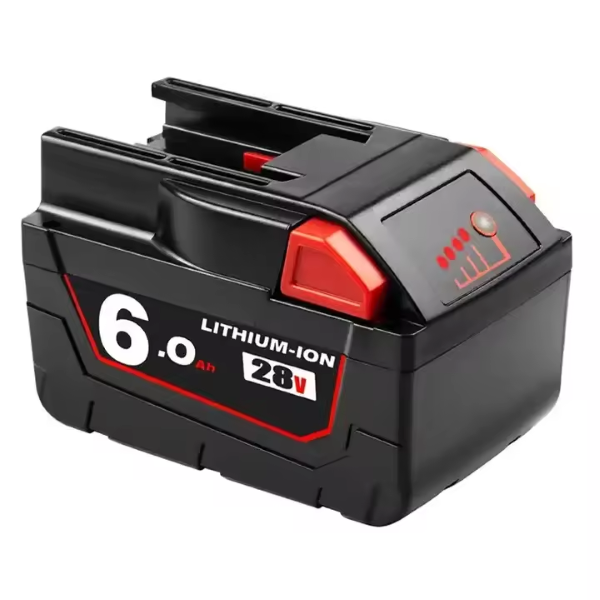
In practical applications, managing DoD is essential for achieving reliable performance and cost efficiency. Different industries rely on lithium-ion battery pack systems, including electric vehicles, renewable energy storage, portable electronics, and power tools.
In these scenarios, proper DoD control helps maintain consistent output and reduces the frequency of battery replacement. For example, in energy storage systems, shallow discharge cycles are often used to extend service life. In power tools, controlled discharge ensures stable power delivery during operation.
As a result, DoD is not only a technical parameter but also a practical factor that influences system performance and long-term cost.
In modern battery systems, the Battery Management System (BMS) plays a key role in monitoring and controlling DoD. The BMS tracks voltage, current, and temperature to estimate the battery’s state of charge and discharge level.
For a lithium-ion battery pack, the BMS ensures that the battery does not exceed safe discharge limits. It prevents over-discharge, which could damage the battery and reduce its lifespan.
In addition, the BMS helps maintain stable operation by balancing cells and optimizing energy usage. This makes DoD management more accurate and reliable in real-world applications.
From a user perspective, there are several simple practices that can help manage DoD effectively.
By applying these practices, users can improve the efficiency and lifespan of their lithium-ion battery pack.
In summary, Depth of Discharge is a key factor in understanding how a battery is used. It shows how much energy has been consumed and helps estimate remaining capacity. More importantly, it has a strong influence on cycle life and long-term performance.
By managing DoD properly, users can extend battery lifespan, maintain stable output, and reduce overall costs. For any application that relies on a lithium-ion battery pack, understanding and controlling DoD is an essential step toward better performance and reliability.
If you are looking for high-quality lithium-ion battery pack solutions, RHY Battery provides reliable products designed for real-world performance. As a professional supplier, RHY Battery focuses on optimized battery design, stable output, and advanced battery management systems.
With strong experience in developing battery solutions for power tools and industrial applications, RHY Battery ensures consistent quality and long service life. Whether you need standard products or customized solutions, RHY Battery is ready to support your business with dependable and efficient battery technology.