- Products
- Solutions
- Customization
- About
- Resources
- Contact
- Request A Quote

Many cordless power tools suffer from a sudden power drop under heavy load, even with a fully charged battery. The root cause is a common lithium battery phenomenon known as voltage sag.
This unavoidable drop in output voltage weakens tool torque, reduces running speed, and shortens overall working time. Understanding how voltage sag occurs and its impact helps professionals and distributors select more reliable power tool battery packs.
Voltage sag in lithium-ion batteries mainly stems from internal resistance. Every battery cell has a certain level of internal resistance, which restricts current flow during high-load operation.
When a cordless tool demands a large instantaneous current, heat builds up inside the cell, and internal resistance rises further. This creates a voltage drop that cannot be avoided with ordinary low-quality cells. Higher current draw and poor thermal dissipation will only make the voltage sag more obvious.
Voltage sag breaks the stable power supply to the tool motor. Without steady voltage support, cordless equipment cannot keep its original rotating speed under continuous load, resulting in slower operation and lower working efficiency on tough jobs.
Peak torque output depends heavily on consistent battery voltage. A sudden voltage drop limits the tool’s maximum power, making it less capable of handling hard drilling, bolt tightening and other high-demand applications.
Unstable voltage creates extra internal resistance and heat inside the battery pack. Such extra energy loss accelerates power consumption, making each full charge last much shorter in real professional use.
Premium battery cells built for high discharge rates maintain stable voltage even under sudden heavy current draw. They feature low internal resistance by design, which naturally restrains sharp voltage drops when power tools kick into full load.
Well-engineered internal layout and wiring minimize extra resistance inside the entire battery pack. Reasonable cell arrangement also helps spread heat evenly, avoiding localized overheating that would otherwise worsen voltage sag.
A well-tuned smart BMS (Battery Management System) monitors battery current and voltage in real time, ensuring power output is regulated rationally rather than restricted unnecessarily. It keeps the battery operating within a stable range and prevents aggressive voltage fluctuation during peak load moments. Top-tier power tool batteries always adopt such high-performance cell solutions.
Effective heat dissipation lowers internal temperature rise during continuous work. Cooler cell conditions hold resistance steady, allowing the battery to sustain stable voltage delivery far longer under professional daily use.
Minor differences between individual cells can easily trigger uneven voltage output under load. Reliable battery manufacturers strictly screen and match cells before assembly. Uniform capacity, discharge capability and internal resistance lay a solid foundation for the whole pack to stay stable without obvious voltage sag.
Poor welding points and loose contacts add extra hidden resistance inside the battery pack. High-standard production workmanship ensures firm connections between cells and circuits. It lowers invisible current loss and maintains smooth power transmission during sudden high-current output.
Top-tier battery packs adapt automatically when the tool switches between light use and heavy workload. They deliver flexible power output according to actual working demand instead of keeping a fixed current limit. This adaptive characteristic effectively avoids abrupt voltage drops at momentary peak load.
Raw material quality directly affects long-term resistance stability. Batteries built with qualified electrode and electrolyte materials maintain steady internal performance over repeated charge and discharge cycles, which are closely tied to the battery's depth of discharge. They are less likely to suffer from rising resistance and voltage decay after long service time.
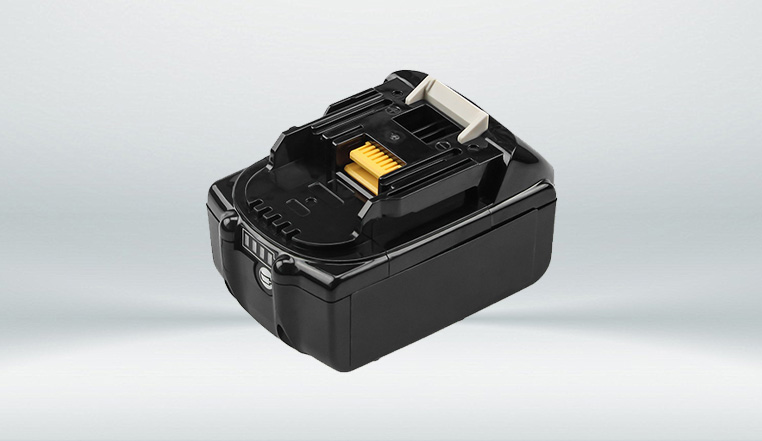
Battery packs built with such strict criteria perform far better in resisting voltage sag and maintaining stable output for professional work scenarios.
Many users assume a fully charged battery will always maintain a stable power output. This is not true. Voltage sag depends largely on cell internal resistance and instantaneous current demand. Even fully charged packs can still drop voltage noticeably when facing a sudden heavy load.
People often link voltage sag solely to battery aging. New low-quality cells also suffer obvious voltage sag right out of the box. Poor raw materials and rough manufacturing lead to high inherent resistance, causing unstable performance regardless of battery age.
A larger capacity rating cannot eliminate voltage sag fundamentally. Big capacity only extends working time. It does not improve internal resistance or instant discharge capability. Some high-capacity packs still lose torque and speed easily under an intensive workload.
The battery management system plays a key role in monitoring and protection. Yet it cannot fix poor cell quality or flawed internal structure. BMS optimizes power output within limits, but it is unable to completely offset the physical defects of low-grade cells.
Voltage sag is inherent to lithium batteries, but its impact on power tool performance can be greatly reduced with quality cells, refined structure, smart BMS and solid thermal design. Investing in well-made battery packs guarantees steady torque, consistent speed and longer runtime. If you are seeking reliable low-voltage-sag batteries for wholesale or custom demands, contact us for professional support and tailored solutions.