- Products
- Solutions
- Customization
- About
- Resources
- Contact
- Request A Quote

When sourcing custom lithium packs, an elite cell is only half the battle; the real brain lies in the battery management system (BMS). For commercial purchasers and hardware engineering teams, high-performing battery management system functions are critical to preventing cell degradation and high RMA rates. Precision engineering in a BMS battery management system directly dictates product reliability under heavy-duty loads. At RHY, our proprietary BMS smart protection circuits deliver the rugged safety and longevity required for industrial-grade applications.
To ensure operational safety and longevity, a robust battery management system for lithium ion batteries must execute four foundational architecture protocols:
The circuitry continuously samples individual cell voltages at a millivolt level. It commands the charge MOSFET to open when any cell reaches its upper limit (typically 4.2V), preventing thermal runaway, and cuts discharge when a cell drops below its safety threshold (typically 2.5V), avoiding irreversible copper dendrite growth.
High-rate discharge tools induce extreme current spikes. The integrated BMS smart protection circuits utilize low-resistance power MOSFETs to detect external short circuits and overcurrent anomalies, triggering a hardware shutdown within microseconds to isolate the fault.
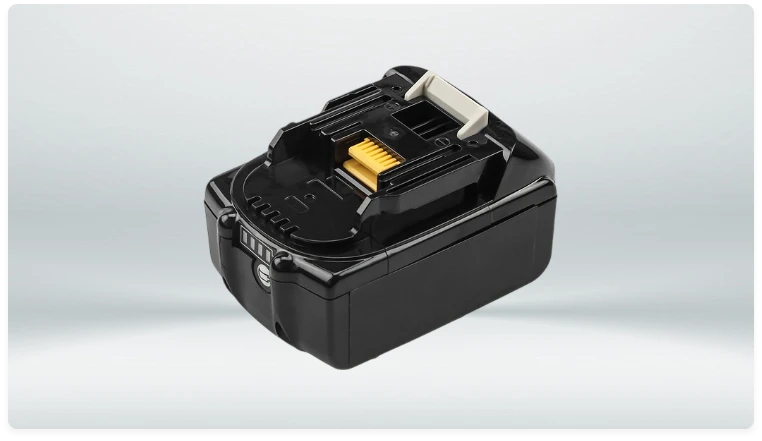
Strategically placed NTC thermistors track localized cell temperatures. If temperatures exceed safe operating limits during heavy-duty discharge or fast charging, the BMS halts operations until the pack cools down to its optimal thermal zone.
While traditional lithium-ion chemistries exhibit linear voltage drops that simplify state-of-charge (SOC) tracking, BMS battery management system lifepo4 applications present flat discharge voltage platforms. Implementing a premium lifepo4 battery management system requires integrating high-accuracy coulomb counting algorithms and passive balancing circuitry to systematically bleed off excess charge, maintaining capacity uniformity across multi-series configurations.
Evaluating a wholesale battery management system requires looking beyond basic datasheets. To ensure long-term field reliability, volume procurement should be audited against the following engineering benchmarks:
The circuitry must exhibit minimal parasitic draw to prevent individual cell depletion and permanent pack degradation during prolonged warehouse storage.
The manufacturer must utilize Tier-1 electronic components and robust multi-layer PCBs capable of enduring continuous high-vibration and extreme-temperature operating environments.
Partnering with a manufacturer that controls both hardware development and firmware coding allows for precise optimization of safety thresholds and customized balancing profiles.
Reliable wholesale BMS battery management system production relies on automated multi-stage calibration and systematic functionality testing rather than manual inspection, ensuring precise defect screening at the factory gate.
A reliable battery management system dictates your brand’s hardware reputation. As a trusted battery management system manufacturer, RHY balances custom engineering with automated SMT production to mitigate field failure risks. Contact our engineering team today to secure your industrial battery supply chain.