- Products
- Solutions
- Customization
- About
- Resources
- Contact
- Request A Quote

When choosing a battery, many users focus on numbers like voltage and ampere-hours, but these figures are often misunderstood. In practical applications such as cordless power tools, energy storage devices, and electric equipment, selecting the right battery depends on understanding what these parameters actually mean. Among them, ampere-hours (Ah) and watt-hours (Wh) are two of the most important indicators. While they are closely related, they describe different aspects of battery performance. Therefore, gaining a clear understanding of their differences helps users make more accurate and efficient decisions.
To better understand battery capacity, it is useful to start with ampere-hours. Ampere-hours measure how much current a battery can supply over a certain period of time. In simple terms, it reflects how long a battery can deliver power under a given load.
For example, a 5.0Ah lithium-ion battery can theoretically deliver 5 amps for one hour, or 2.5 amps for two hours. This makes Ah a useful indicator when estimating runtime in consistent working conditions. However, it is important to note that Ah does not include voltage. As a result, it cannot fully represent the total energy stored in the battery. This limitation becomes clear when comparing batteries with different voltage platforms.
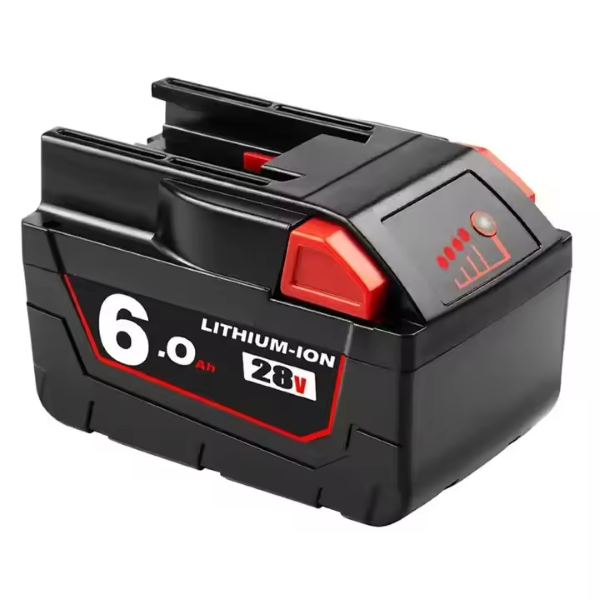
Moving from current to energy, watt-hours provide a more complete picture of battery capacity. Watt-hours measure the total amount of energy stored in a battery by combining both voltage and current capacity.
The calculation is straightforward:
Watt-hours (Wh) = Ampere-hours (Ah) × Voltage (V)
For instance, an 18V 5.0Ah battery has a total energy of 90Wh. This value directly reflects how much work the battery can perform. Because Wh includes voltage, it allows users to compare batteries across different systems more accurately. In real-world applications, this makes Wh a more reliable metric than Ah alone.
Looking at both parameters together, the difference becomes clear. Ampere-hours describe current capacity over time, while watt-hours describe total energy. These two metrics serve different purposes and should not be used interchangeably.
In practical terms:
Therefore, when comparing batteries with the same voltage, Ah can be a useful reference. However, when comparing batteries across different voltage platforms, Wh becomes the more accurate and fair metric. This is why professional users and battery manufacturers often prioritize watt-hours in performance evaluation.
To further understand the relationship, it is necessary to look at voltage. In lithium-ion battery packs, voltage is increased by connecting individual cells in series. Each cell typically has a nominal voltage of about 3.6V. By combining multiple cells, manufacturers can create different voltage platforms such as 12V, 18V, or 36V systems.
Higher voltage allows tools and equipment to deliver greater power output, especially under heavy load conditions. This is particularly important for applications such as cutting, drilling, or grinding, where consistent performance is required. However, increasing voltage alone does not increase total energy unless capacity is also adjusted. This highlights why voltage must always be considered together with Ah.
While voltage affects power, ampere-hours mainly influence runtime. Increasing Ah is achieved by connecting battery cells in parallel, which increases the total capacity without changing the voltage.
As a result, a higher Ah battery can run longer under the same working conditions. However, runtime is not fixed. It depends on how much current the tool draws during operation. Under heavy load, the battery will drain faster, while lighter tasks will extend runtime.
This means Ah provides a useful estimate, but actual performance always depends on real working conditions, including load, temperature, and tool efficiency.
From a practical perspective, watt-hours provide the most balanced way to compare batteries. For example, an 18V 5.0Ah battery and a 36V 2.5Ah battery both have 90Wh of energy. Even though their voltage and Ah values differ, their total energy is the same.
This shows that neither higher voltage nor higher Ah alone determines battery capacity. Instead, the total energy stored in watt-hours is the key factor. By focusing on Wh, users can avoid confusion and make more objective comparisons between different battery systems and brands.
In real applications, especially in cordless power tools, both power and runtime are critical. High-voltage batteries provide stronger performance for demanding tasks, while higher Ah batteries extend operating time.
For example, in cutting or drilling applications, stable voltage ensures consistent speed and torque. At the same time, sufficient energy capacity ensures that the task can be completed without frequent battery changes. Therefore, the ideal battery solution often combines the right voltage platform with an appropriate Ah level.
This balance is particularly important for professional users who require both efficiency and reliability in daily operations.
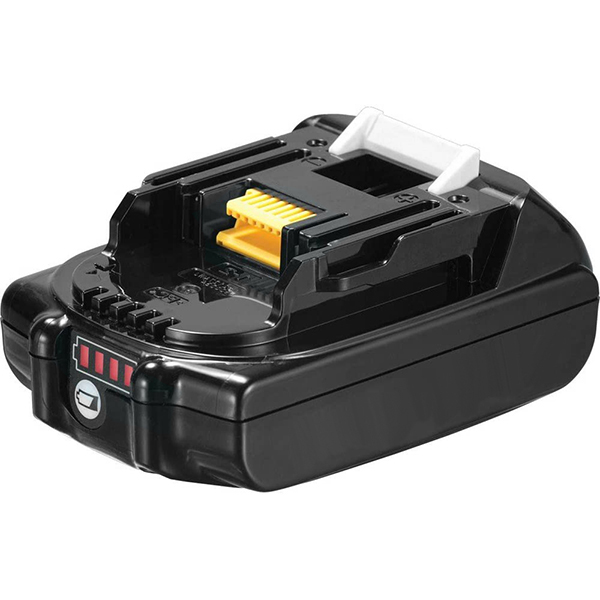
Despite the availability of specifications, misunderstandings are still common. Some users assume that a higher Ah rating always means better performance. Others may confuse nominal voltage with maximum voltage, such as 18V versus 20V Max systems.
In reality, these differences are often related to labeling methods rather than actual performance. More importantly, focusing only on a single parameter can lead to incorrect conclusions. Battery performance depends on multiple factors, including cell quality, internal resistance, and battery management systems.
Understanding the role of Wh helps avoid these common mistakes and leads to more informed decisions.
When selecting a lithium-ion battery, a structured approach can simplify the process. First, ensure that the voltage matches the tool platform. Batteries with different voltage levels are generally not interchangeable.
Next, choose the appropriate Ah based on usage needs. Lower capacity batteries are suitable for light tasks, while higher capacity options are better for continuous or heavy-duty work.
Finally, compare watt-hours to evaluate total energy. This provides the most reliable basis for comparing different batteries. By following these steps, users can select batteries that meet both performance and runtime requirements.
In summary, ampere-hours and watt-hours are both important, but they serve different roles. Ampere-hours indicate how long a battery can deliver current, while watt-hours represent the total energy available. For accurate comparison and better performance evaluation, watt-hours should be the primary reference.
By understanding how voltage, Ah, and Wh work together, users can make smarter decisions when selecting lithium-ion batteries for power tools and other applications.
If you are looking for a reliable power tool battery manufacturer with consistent performance and accurate capacity, RHY Battery is your trusted partner.
RHY Battery specializes in high-quality lithium-ion battery solutions, offering stable output, optimized energy design, and strong compatibility across major tool platforms. Whether you need longer runtime or reliable power delivery, RHY Battery provides solutions tailored to your application needs.
Contact RHY Battery today to explore professional battery solutions that deliver real performance.