- Products
- Solutions
- Customization
- About
- Resources
- Contact
- Request A Quote

Introduction
Deciding whether to use OEM or ODM determines how fast your product hits the market and how much budget you spend upfront on tooling. It is a choice between building from your own schematics or leveraging a factory-proven design. As an industrial battery pack manufacturer, we analyze these trade-offs to help you choose the right setup for production.
The distinction between OEM and ODM comes down to who owns the engineering design and the initial blueprints.
In an OEM partnership, you retain complete control over the product's intellectual property and technical specifications. Your team provides the battery manufacturer with a finalized Bill of Materials (BOM), CAD files for the outer enclosure, circuit schematics, and custom BMS (Battery Management System) firmware instructions.
The manufacturer's role is strictly execution—utilizing automated production lines, precise spot-welding, and rigorous quality control to build the battery pack exactly to your documentation. For example, if your company has developed a proprietary, ultra-slim handheld vacuum cleaner and already engineered a unique internal battery layout to fit that specific handle, OEM is the path you require.
In an ODM setup, the manufacturer has already invested the R&D resources to design, test, and certify the battery architecture. You do not need an in-house team of electrochemical engineers; instead, you leverage pre-engineered, field-tested platforms and sell them under your own brand name.
This model is highly prevalent in mature product sectors. For instance, if you look at our inventory of replacement Power Tool Batteries, these represent ready-made ODM solutions. The cell configurations, safety circuits, and structural housings are already finalized and certified. As a client, you can skip the lengthy prototyping phase and directly introduce a reliable, market-ready product line to your distributors.
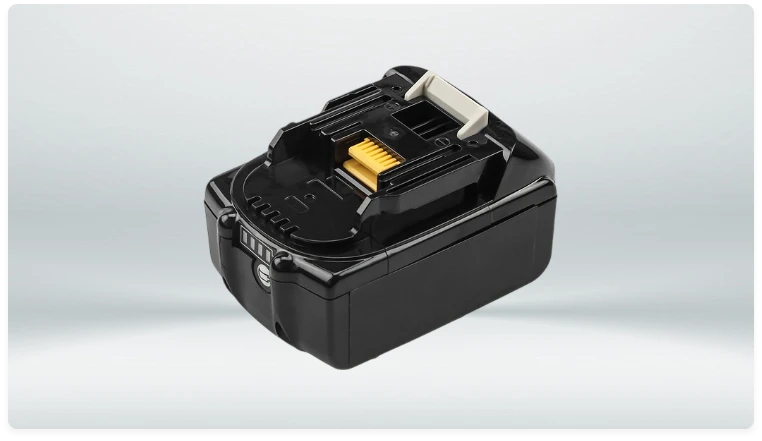
To help your procurement and engineering teams evaluate the most cost-effective path, we have broken down the operational differences into four critical decision pillars.
|
|
|
|
|
|
|
|
|
|
|
|
|
|
|
|
|
|
|
|
While an OEM partnership requires more upfront capital, it is the necessary path when your project requires total design control.
Choosing the OEM route is essential under the following conditions:
If your team has engineered a unique circuit topology or custom BMS firmware, OEM keeps 100% of the patents and design files exclusively yours.
If you are designing an ultra-slim vacuum cleaner handle or an oddly shaped industrial tool, standard off-the-shelf packs will not fit. You need custom injection molds.
When your engineering Bill of Materials (BOM) specifies premium cell brands or unusual connector interfaces to withstand harsh environments that factories do not typically stock.
If your primary goals are saving upfront R&D budget and accelerating your timeline, leveraging a factory's pre-engineered battery architecture is often the most practical business decision.
Choosing the ODM route is highly effective under the following project scenarios:
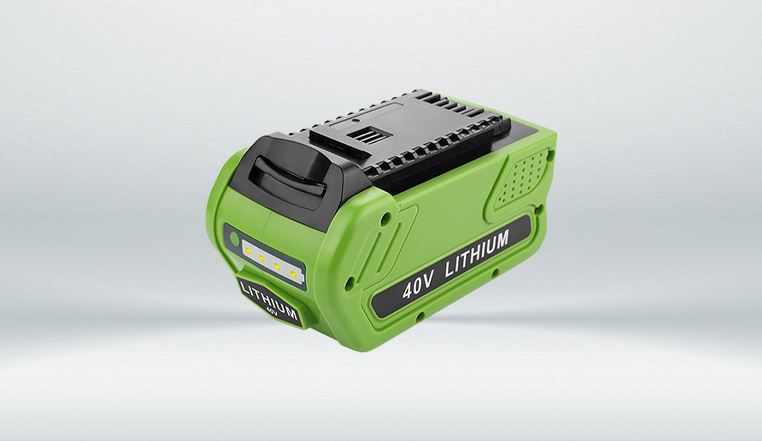
Developing a pack from scratch takes months of engineering and testing. If you need to launch a standard product line quickly, utilizing field-tested setups like our Garden Tool Batteries allows you to skip the prototyping phase entirely and go straight to market.
International battery compliance (such as UN38.3, CE, IEC, and UL) requires substantial testing fees and lengthy laboratory reviews. An ODM platform uses designs that are already certified at the factory level, automatically absorbing those regulatory barriers for your brand.
You do not have to accept a generic "cookie-cutter" product. Many B2B buyers choose a middle ground—using a factory's proven internal circuit and cell configuration, but slightly modifying the outer branding plate, colorway, or connector layout to match their existing product line without triggering new tooling costs.
Ultimately, successfully scaling your battery project depends on choosing a partner capable of executing whichever model fits your business. Whether you require a bespoke OEM build from your finalized schematics or want to streamline market entry using a certified ODM platform, we provide the technical infrastructure to support your volume production. Please contact us to review your design specifications.