- Products
- Solutions
- Customization
- About
- Resources
- Contact
- Request A Quote

Lithium-ion (Li-ion) batteries have become the cornerstone of modern energy storage, powering everything from electric vehicles to smartphones and renewable energy storage systems. As the demand for energy-efficient, long-lasting batteries continues to grow, it’s important to understand the principles, materials, and manufacturing processes that drive this technology. This article delves into the workings of Li-ion batteries, their components, and the steps involved in their production, providing a comprehensive overview of their functionality and performance characteristics.
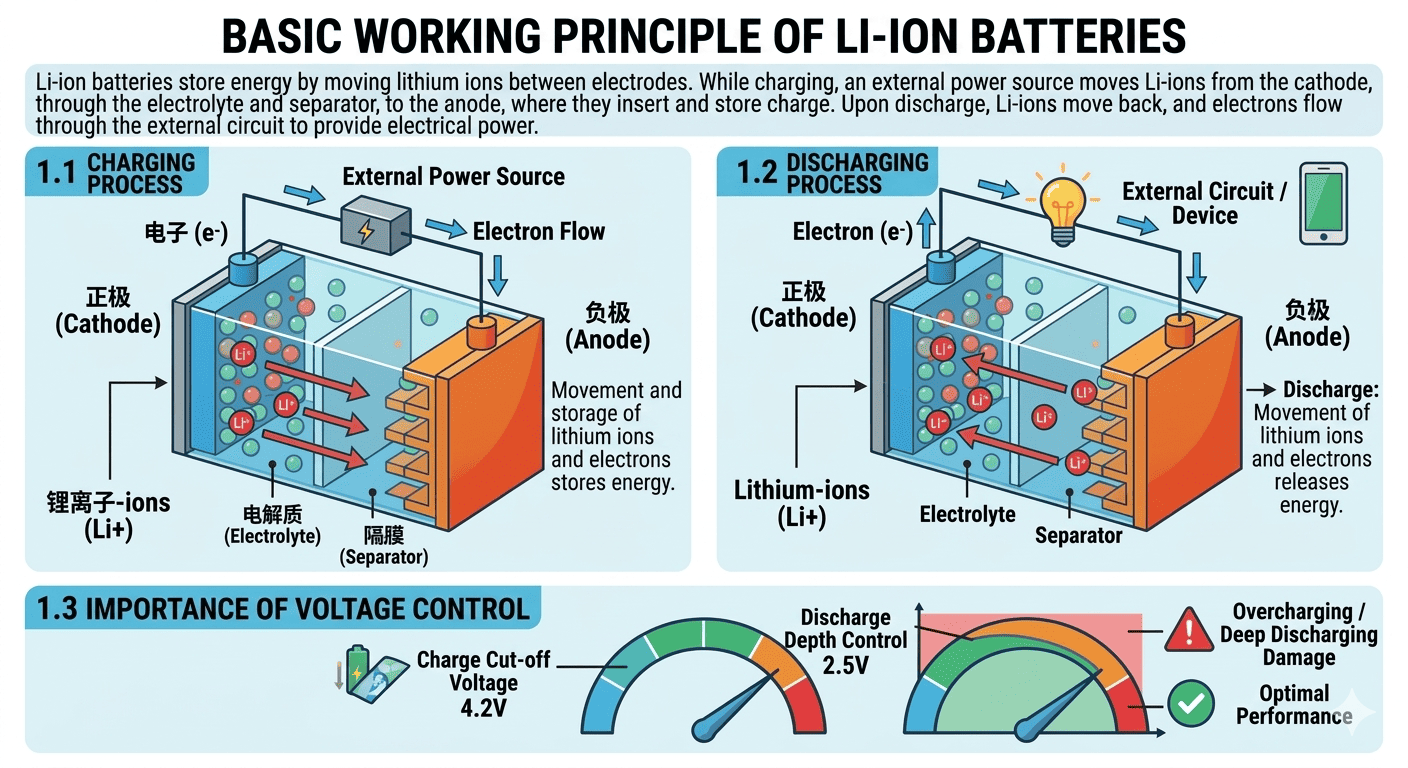
At the core of every lithium-ion battery is the ability to store and release energy through the movement of lithium ions between two electrodes. The battery consists of a cathode (positive electrode), an anode (negative electrode), an electrolyte, and a separator.
When a Li-ion battery is charging, an external power source causes electrons to flow from the cathode to the anode through an external circuit. Meanwhile, lithium ions (Li+) move from the cathode, through the electrolyte, and across a separator to the anode. This movement of ions and electrons stores energy within the battery.
When the battery is in use, it discharges its stored energy. The lithium ions move back from the anode to the cathode, while electrons flow through the external circuit to power the device. This cycle of charging and discharging allows the battery to provide a consistent flow of electrical energy.
The charging and discharging of lithium-ion batteries are tightly controlled to ensure the battery’s longevity. Overcharging or deep discharging the battery can cause irreversible damage to its internal structure. For optimal performance, charging voltage is typically limited to 4.2V, and discharge voltage is restricted to 2.5V.
The performance of a Li-ion battery heavily depends on the materials used for the electrodes, electrolyte, and separator. Here’s an overview of the critical materials that make up a typical Li-ion battery.
The cathode is where lithium ions are stored during the charging process. Common cathode materials include:
The anode is typically made of graphite, which acts as a host for lithium ions during the charging process. When the battery discharges, the lithium ions move back to the cathode. The choice of anode material impacts the battery’s charge capacity and cycle life.
The electrolyte facilitates the movement of lithium ions between the cathode and anode. It is typically a lithium salt dissolved in an organic solvent. The electrolyte must be stable and able to withstand the high voltages generated during the battery’s operation.
The separator is a porous material that physically separates the cathode and anode, preventing them from coming into direct contact while allowing the movement of lithium ions. The separator plays a vital role in preventing short circuits and improving battery safety.
Manufacturing Li-ion batteries involves several complex steps, including electrode preparation, cell assembly, and testing. Below is an overview of the key stages in battery production.
The first step in battery manufacturing is the preparation of the electrodes. This involves mixing the active materials (such as lithium cobalt oxide for the cathode or graphite for the anode) with conductive agents, binders, and solvents to create a slurry. The slurry is then coated onto metal foils—aluminum for the cathode and copper for the anode. After coating, the electrodes are dried and compressed to achieve the desired thickness and density.
Once the electrodes are prepared, the next step is assembling the cell. The electrodes are stacked or wound with a separator between them to create a "sandwich" structure. The separator ensures that the cathode and anode do not touch directly while allowing ions to flow between them. This assembly is then inserted into a casing to hold the cell's structure together.
After the cell assembly, the next step is to fill the battery with electrolyte. The electrolyte is injected under vacuum to ensure the cell is free of moisture. Once the electrolyte is added, the cell is sealed to prevent leakage.
The battery undergoes its first charge cycle, known as formation, where the solid electrolyte interphase (SEI) layer forms on the anode. This layer is crucial for battery stability and longevity. After formation, the battery is aged for several hours to allow the materials to settle and ensure stable performance.
Once the battery has been formed and aged, it undergoes a series of tests to verify its performance, safety, and quality. These tests include voltage checks, capacity measurements, and safety tests to ensure that the battery meets the required standards.
The performance of a Li-ion battery is determined by several factors, including its capacity, lifespan, and safety features.
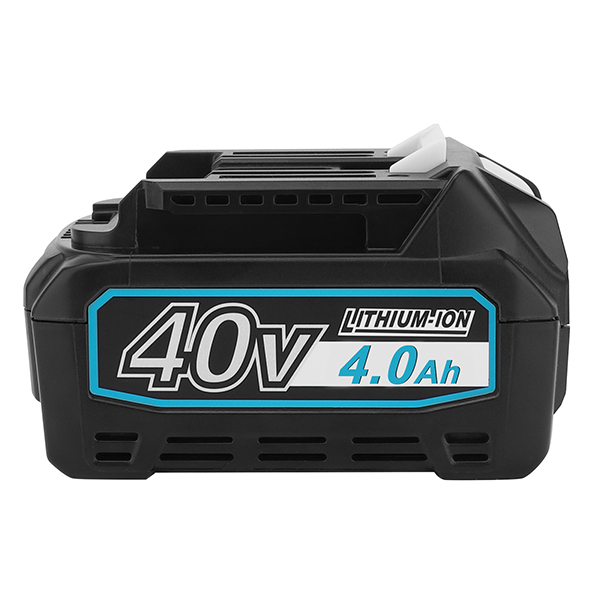
The battery’s electrical performance is largely determined by its capacity and voltage. The capacity refers to the total amount of energy the battery can store and release, typically measured in milliampere-hours (mAh) or ampere-hours (Ah). The voltage determines the energy output, with most Li-ion batteries having a nominal voltage of 3.7V.
Cycle life refers to the number of charge and discharge cycles a battery can undergo before its capacity significantly diminishes. For most Li-ion batteries, the cycle life ranges from 300 to 500 cycles, depending on the battery chemistry and usage conditions.
Safety is a critical aspect of Li-ion battery design. The most common safety features include overcharge protection, thermal protection, and short circuit prevention. The separator and electrolyte are designed to prevent the risk of thermal runaway, which can lead to fires or explosions.
As the demand for energy storage solutions continues to rise, the future of Li-ion batteries looks promising. Innovations are ongoing to improve energy density, safety, and cost-effectiveness. Researchers are exploring new cathode and anode materials, such as silicon-based anodes and solid-state electrolytes, to enhance performance and lifespan.
In conclusion, Li-ion batteries have proven to be a vital technology in modern energy storage, powering everything from smartphones to electric vehicles. Understanding the principles, materials, and manufacturing processes behind these batteries is crucial for making informed decisions in industries that rely on energy storage.
If you're looking for high-quality lithium-ion battery packs, RHY Battery is here to meet your needs. As a leading supplier of Li-ion battery packs, we provide reliable and efficient solutions for a wide range of applications, including electric vehicles, power tools, and renewable energy storage. Contact us today to learn more about our products and how we can help you with your energy storage solutions.