- Products
- Solutions
- Customization
- About
- Resources
- Contact
- Request A Quote

In modern manufacturing, construction, and maintenance industries, power tools have become essential for improving efficiency and productivity. Choosing the right battery is critical to optimizing tool performance and reducing operational costs. But with various battery types, power ratings, and compatibility options available, how should businesses make the best decision?
This guide will help you understand the key factors in selecting power tool batteries, covering battery types, power requirements, compatibility, and maintenance considerations.
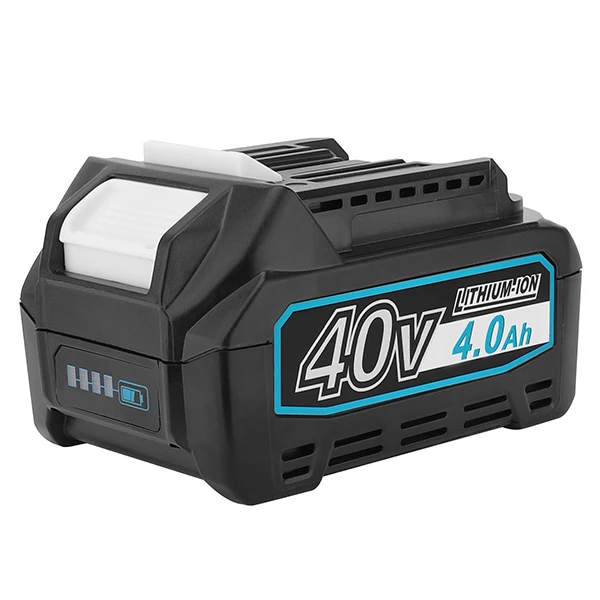
The two main types of batteries used in power tools are Nickel-Cadmium (NiCd) and Lithium-Ion (Li-Ion). Each has its own advantages and limitations.
Recommendation: If your business frequently operates in extreme conditions, NiCd batteries may be the better choice due to their durability. However, for companies prioritizing efficiency, lightweight tools, and long battery life, Li-Ion batteries are the superior option.
Battery voltage directly determines the power output of a tool. Generally, higher voltage batteries are needed for heavy-duty applications, while lower voltage batteries are sufficient for light-duty tasks.
Some manufacturers offer multi-voltage compatibility, allowing a lower-voltage battery to be used on higher-voltage tools. This increases flexibility and helps businesses reduce costs by minimizing the need for multiple battery types.
Many power tool brands have introduced unified battery platforms, enabling a single battery type to power multiple tools. Some notable examples include:
Recommendation: When purchasing power tool batteries, prioritize brands with cross-compatible battery platforms. This approach reduces long-term procurement costs and simplifies battery management across different tools.
Battery runtime depends on the amp-hour (Ah) rating. The higher the Ah value, the longer the battery will last, but it will also be larger and heavier.
Example calculation:
If a power tool consumes 2A of current under full load:
For businesses requiring uninterrupted operation, higher Ah batteries are recommended to minimize charging frequency and improve productivity.
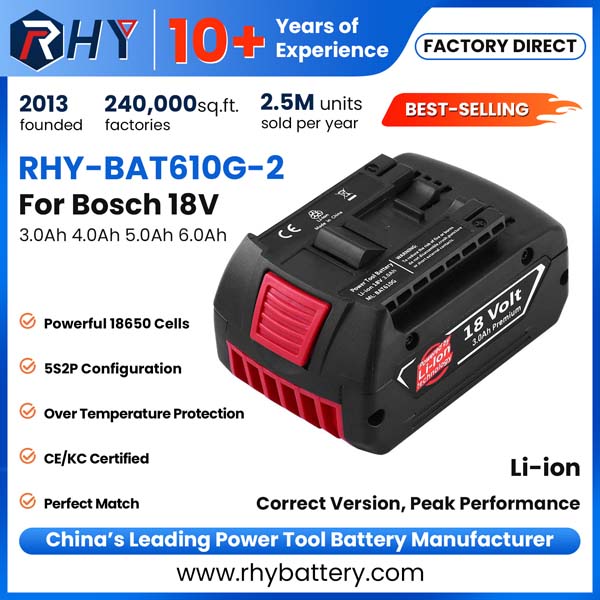
To maximize the lifespan of power tool batteries, proper maintenance is essential. Below are some key best practices:
Old batteries should never be discarded as regular waste due to environmental concerns. Instead, businesses should follow responsible disposal methods:
When selecting a power tool battery, businesses should carefully consider battery type, voltage and power output, compatibility with existing tools, runtime capacity, and proper maintenance. Choosing the right battery will not only improve tool efficiency but also lower long-term operational costs.
If you are looking for high-performance, reliable, and long-lasting power tool batteries, RHC batteries provide the optimal solution.
Contact us today for customized battery solutions!